
What Is a Pressure Reducing Valve — And Does Yours Need to Be Replaced?
Updated: Aug 23
Most homeowners never think about their pressure reducing valve — until something goes wrong. Here's what you need to know about this small but critical part of your plumbing system.
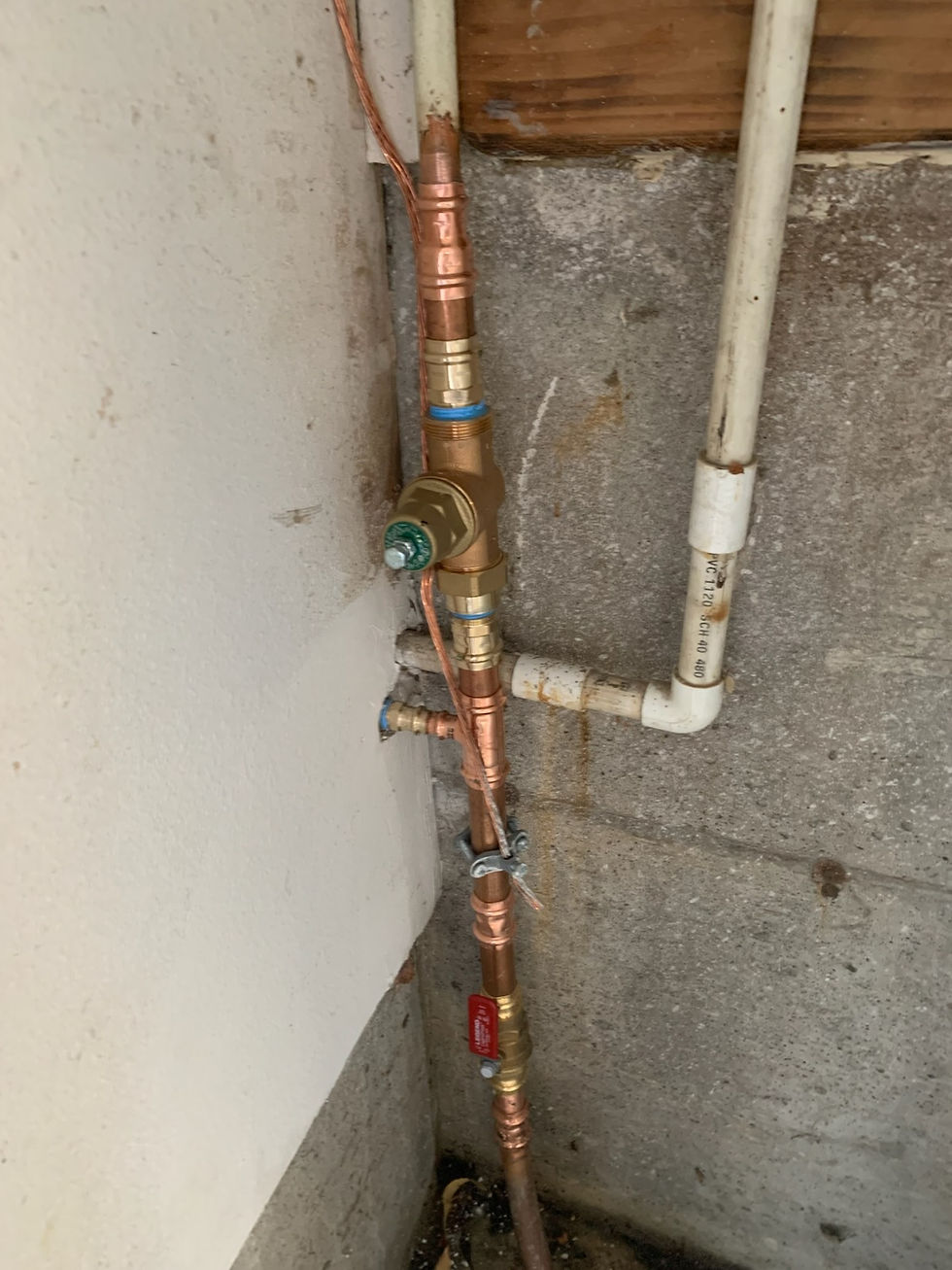
What a PRV does
Water coming from the street arrives at your home at very high pressure. Left unchecked, that pressure would tear through your pipes, wear out your fixtures, and eventually cause real damage. A pressure reducing valve sits at the point where the water enters your home and brings that pressure down to a safe range — between 60 and 80 PSI.
Think of it as a gatekeeper. Without it, or with one that's failing, your entire plumbing system is absorbing pressure it was never designed to handle.
Signs your PRV is going bad
PRVs don't last forever. Over time they wear out, and when they do, you'll usually notice one or more of these symptoms:
Pressure swings in the shower or sink. If someone flushes the toilet or turns on a faucet and you immediately feel a change in pressure, that's a sign your PRV isn't regulating consistently.
Chattering or banging sounds. A failing PRV can make a chattering noise at the valve itself, or you may hear it traveling through the pipes. If you've been wondering what that sound is, this is often the culprit.
Water dripping from your water heater's relief valve. The temperature and pressure relief valve (TPR valve) on your water heater is a safety device. If it's releasing water, that's your system telling you the pressure is too high — often 150 PSI or above. That's not a small problem.

What happens if you don't have a PRV
If your home doesn't have a pressure reducing valve and your street pressure is running at 100 PSI or higher, your plumbing is under serious strain. High pressure accelerates wear on every fixture in your home, stresses pipe joints, and can eventually cause pipes to burst. It's not a matter of if — it's when.
What to do
If any of this sounds familiar, the first step is getting your pressure tested. We carry the equipment to check it on the spot, inspect your existing PRV, and let you know whether it needs adjustment, replacement, or whether your home needs one added.
Give us a call at (206) 499-1233 or contact us here. We'll get you on the schedule and make sure your home is at the pressure it's supposed to be.
Frequently Asked Questions
What is a normal water pressure range for a home?
Between 60 and 80 PSI is the safe range for residential plumbing. A pressure reducing valve is what keeps street-level pressure from exceeding that.
Can high water pressure damage my home even if nothing looks wrong yet?
Yes. High pressure wears down fixtures, stresses pipe joints, and shortens the lifespan of appliances like your water heater — often long before a pipe actually bursts.
How do I know if I need a PRV or just need mine replaced?
If your home has no PRV and street pressure is testing above 80 PSI, you need one installed. If you already have one and you're seeing pressure swings, chattering, or a relief valve releasing water, it likely needs replacement rather than a new install.
Richter Plumbing LLC — Veteran-Owned | Lake Stevens, WA | Lic# RICHTPL763JE


Comments